
Emergency Release - Cutting Rope
You always need to be prepared to get someone out of rope instantly, if needed. This means having some means of cutting the rope in your pocket, or on your belt, or another place immediately within reach.
Important: There are many ways to plan ahead and avoid getting into a situation where you might need to cut the rope, including:
- Playing within your skill level and the skill level of your partner.
- Negotiating well.
- Making sure all your physical and medical needs are met before playing.
- Building experience with a person over time, starting easy and building to the more challenging or complex things once you are both more comfortable with each other.
- Using techniques that allow for quick release if putting someone in a challenging position or one with a higher risk of nerve compression. One great quick release technique is to use a Slipped Somerville Bowline.
- Using shorter ropes to give you more options or “outs” in emergencies.
If you follow and practice these guidelines and other safety concepts in this book, you will be less likely to get into a situation where you need to cut a rope. You can build the skills and experience to quickly and calmly untie a person. This is usually better unless the situation is an emergency.
The key to maintaining control over rope is tension. Once a blade of any kind cuts through your rope, you do not have control over the tension and you do not have control over your rope. In some cases, maintaining control matters less than removing the rope as quickly as possible. However, by being diligent with negotiation, communication, and building in “outs”, you can save yourself from having to cut rope in most cases — and you can maintain control over the rope and the scene.
But emergency situations can and will still happen, no matter how good you are or how well you prepare!
Despite best efforts, a medical emergency may arise. An accident of some type can occur. The bottom may have a panic attack. The fire alarm may go off. A nosey neighbor or relative might knock on your door. There are many situations that may require that you are able to quickly release your partner.
If it is an emergency, do not hesitate. Act quickly. Assess the situation and get them free as quickly as you can safely do so. If that means holding their weight while you or a bystander cuts the rope — do it.
When in doubt, cut them out.
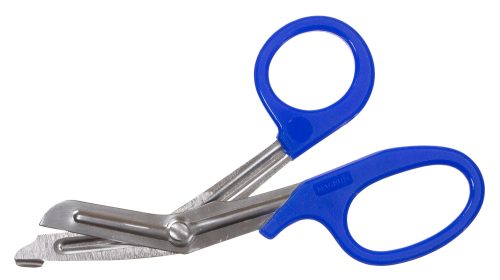
Always have a tool within reach to quickly and safely cut rope! I personally always have EMT shears in my bag and put them right beside me or in my back pocket when I am rigging, but I also have a backup rescue hook on my belt. The situation will dictate which one I reach for.
Recommended — High quality, heavy-duty emergency EMT shears are the most reliable, lowest risk option for most people. They are designed to cut seatbelts, leather boots, and more in an emergency. Their shape and blunted tips are important features that reduce risk when being used. However, they are bulkier than rescue hooks (below) and may be difficult to use in some positions. Be wary of cheap ones that dull quickly, or be prepared to replace them after a few uses.
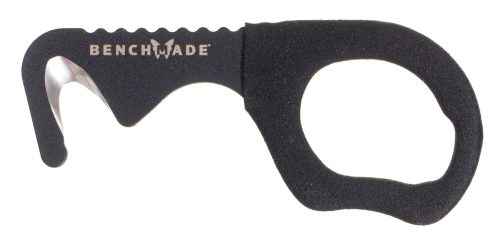
Also good, but with risks — Rescue Hooks. These are fast and nimble. I personally wear one on my belt at all times. It is important to understand that they work well when rope is under tension, but not as well if the rope is slack. You may need to add tension to the rope in some cases to help them cut. Also, there have been cases of people using them incorrectly and causing a secondary injury. If you choose this option, research how to use them properly and practice doing so.
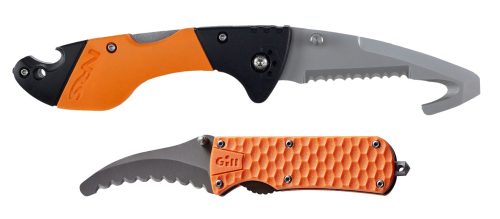
Not recommended, but used sometimes — Knives. Some people use knives, but we recommend against this. These are among the highest risk options. It is far easier to slip and make a bad situation worse when using a knife. If you insist on using one, at lease choose a “rescue knife” that has a blade only on one side AND has a squared off or blunted tip.
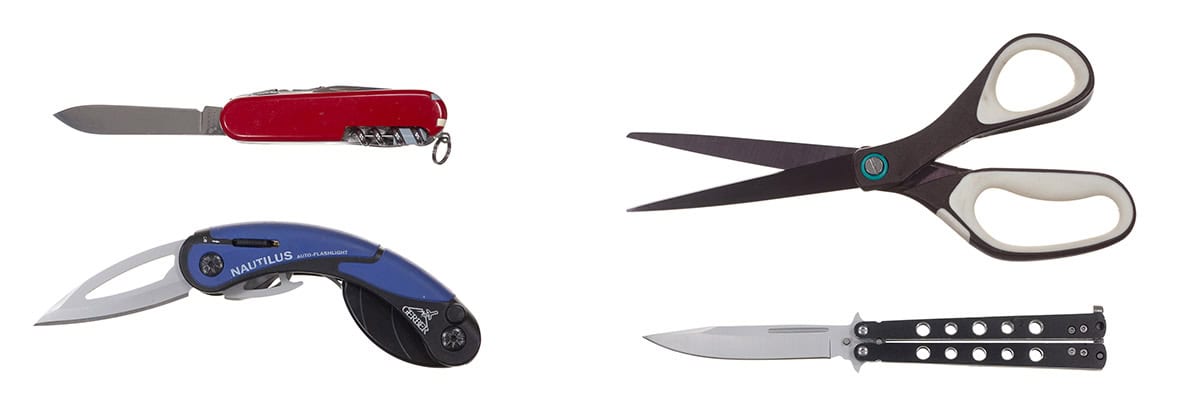
Do not use tools that are not designed for emergency use near a human. Anything with a sharp tip or with a blade on both sides—standard scissors or knives, for example—should not be used in an emergency. Anything that look anything like these is highly dangerous in an emergency situation:
Practice Cutting Rope
It is very important to practice cutting rope. Sacrifice a piece of rope and test out how it cuts with your chosen cutting tool. Try cutting it under tension and when slack, try cutting a bundle of ropes as well as just a single strand.
- Does your tool cut cleanly and quickly?
- How hard is it to cut?
- How long does it take?
- Do you have to “chew” at the ropes with it, or have to make multiple passes?
If you get anything other than a smooth, clean, controlled cut, choose another tool.