
Nerves of the Legs & Feet
The major areas to consider in the leg are around the knee and ankle. Avoid tight rope around either location to minimize the chance of compression.
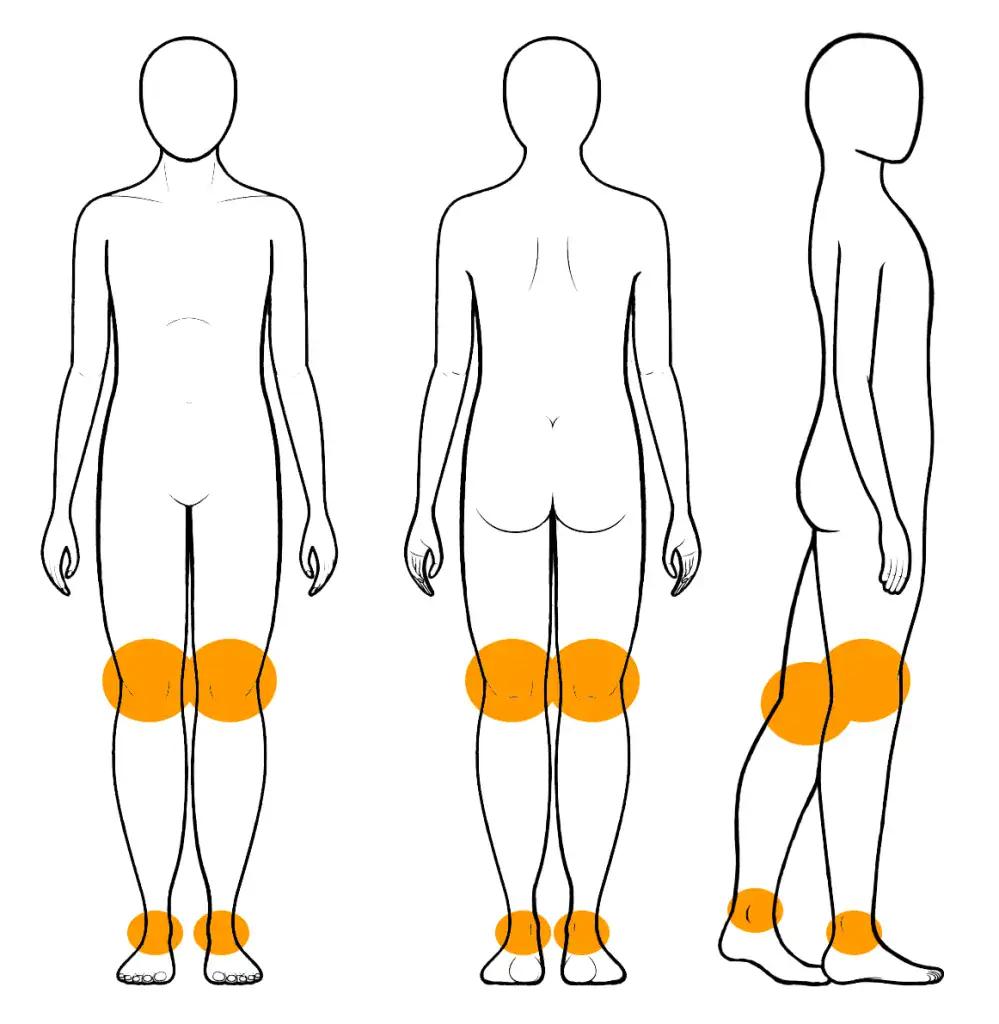
Saphenous Nerve
- More-Vulnerable Locations: As it runs behind the inside of the knee.
- Rope Placement: Rope tied around the lower thigh near or behind the knee may cause compression.
- Results of Compression: Decreased sensation, numbness, tingling, or a burning sensation along the inner side of the lower leg and/or calf could indicate compression of the saphenous nerve.
Peroneal Nerve
- More-Vulnerable Locations: As it runs from behind the knee and across to the outside of the knee.
- Rope Placement: Rope passing over the legs near the knee may cause compression as well as tight rope around the ankle.
- Results of Compression: Decreased sensation, numbness, tingling, or a burning sensation along the top of the foot, or the inability to flex the toes up towards the shin, could indicate compression to the peroneal nerve.
Sciatic Nerve:
This nerve deserves mention here, though it would be extremely rare for it to be compressed by rope. Instead, this nerve is often affected by long periods of extreme flexion. For example, if the legs are held or tied back along the sides of the body for a long period of time (as in a position for sex), this may result in decreased sensation, numbness, tingling, or burning along the outside of the thigh and may also result in “buckling legs” … where the legs don’t seem to function correctly at first and need some time to recover before they feel stable again. (Also worth noting that those with pre-existing complications with their sciatic nerve will want to be particularly careful about the positions in which they are tied for any length of time.)