
Nerves of the Torso
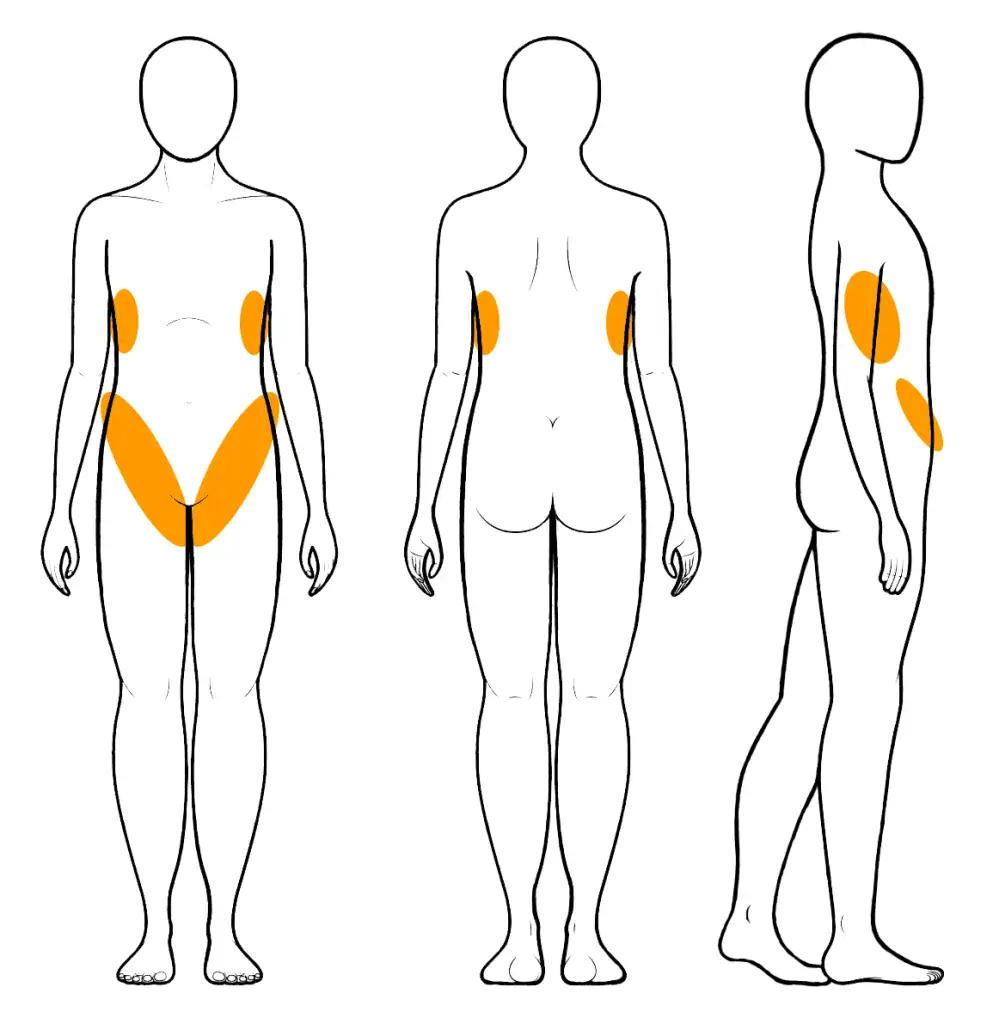
Compression-related injuries in the torso and hips tend to result mainly in sensation loss rather than limitations in movement, but these can still create challenges to normal movement and functions. The major areas to watch here are along the side of the ribcage, along the top of the hip bones, and along the “panty line” in the crease of the leg and thigh.
Long Thoracic Nerve
- More-Vulnerable Locations: Along the side of the rib cage. This nerve is particularly vulnerable due to extreme flexion (arms tie overhead, for example).
- Rope Placement: Rope that passes tightly across the sides of the rib cage (common in chest harnesses) can contribute to compression, particularly when loaded in suspension and when the upper body is in flexion.
- Results of Compression: Decreased sensation, numbness, tingling, or a burning sensation between the shoulder blades, along the side of the ribs, and moving into the front of the chest below the breast. Can also result in a feeling of tightness in the chest and difficulty breathing. Particularly susceptible to cumulative injury. Over time, this can result in “winging of the scapula” where the shoulder blades jut out at rest (instead of folding along the back). Without correction, this can lead to the shoulders doing extra work to maintain proper positioning, which can then result in complications with the shoulder.
Lateral Femoral Cutaneous Nerve
- More-Vulnerable Locations: As it runs across the outside and front of the hip and along the crease of the leg and hip. (Note that this positioning is similar to the ilioinguinal and iliohypogastric nerves.)
- Rope Placement: Rope passed over the hips and loaded in face-down suspension is particularly likely to cause compression. This is the nerve most-commonly injured by ties that include rope around the hips. 8
- Results of Compression: Decreased sensation, numbness, tingling, or a burning sensation along the top of the thigh or knee, or weakness of the knee or leg when bearing weight (and particularly in movements or positions similar to walking down stairs) could indicate compression of the femoral nerve.
Ilioinguinal and Iliohypogastric Nerves
- More-Vulnerable Locations: As it runs along the iliac crest (top of hip bone) and along the crease of the leg and hip. (Note that this positioning is similar to the femoral nerve.)
- Rope Placement: Waist and hip rope that is loaded in an inversion (when a person is suspended with their chest lower than their hips, perhaps even fully upside down) is particularly likely to cause compression.
- Results of Compression: Decreased sensation, numbness, tingling, or a burning sensation in the region of the groin could indicate compression of the ilioinguinal or iliohypogastric nerves.
Obturator Nerve
- More-Vulnerable Locations: As it exits the groin on the inner thigh.
- Rope Placement: Ropes that bind tightly around the upper thigh may cause compression. This seems to be highly variable in both location and sensitivity. This is typically the nerve that causes people to have specific preferences about how high or low into the groin area they prefer upper-thigh rope (such as in a folded-leg tie).
- Results of Compression: May cause tightness or burning when the rope is loaded and may result in loss of sensation or tingling near the groin on the inner part of the thigh.