
The Box Tie Position
By Lazarus Redmayne
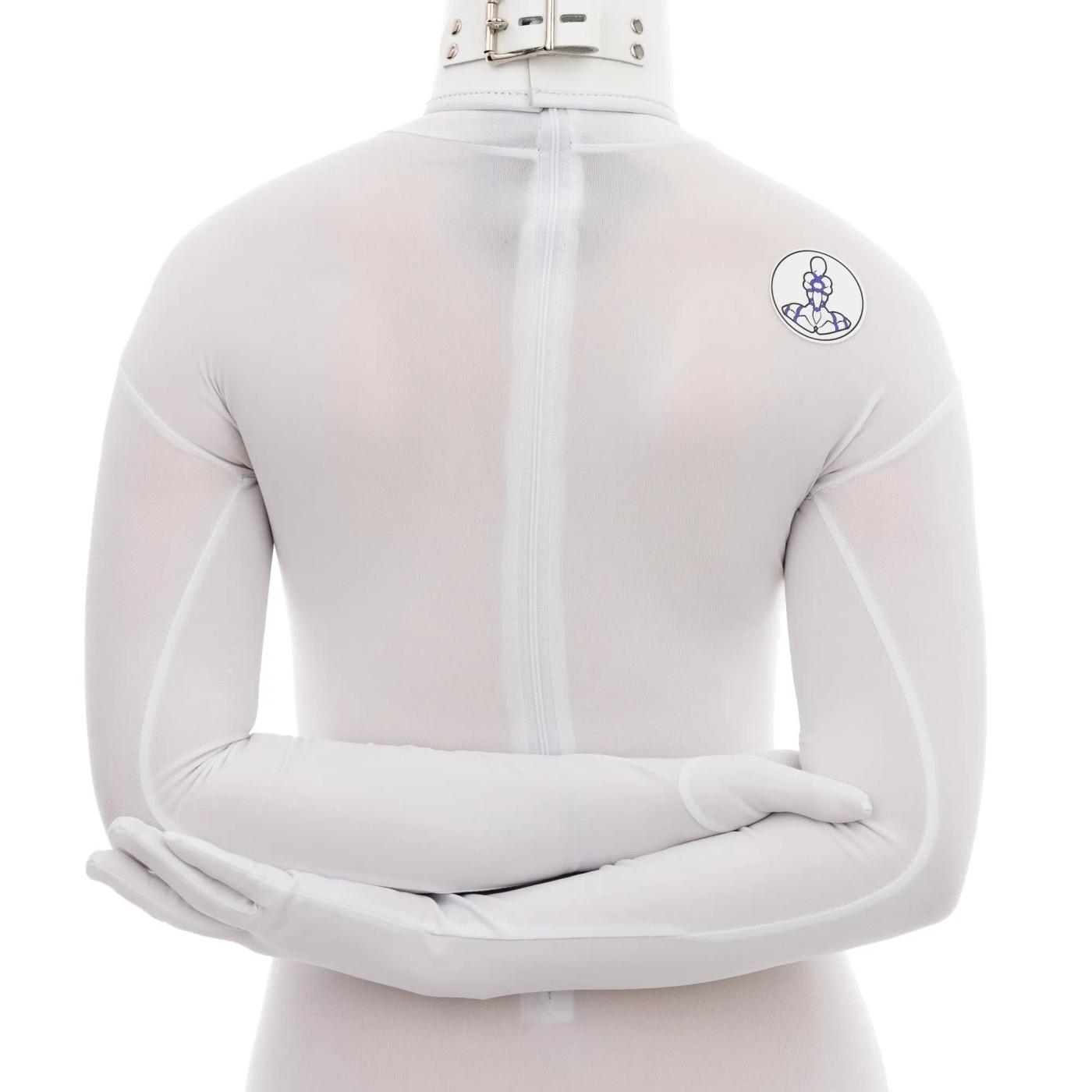
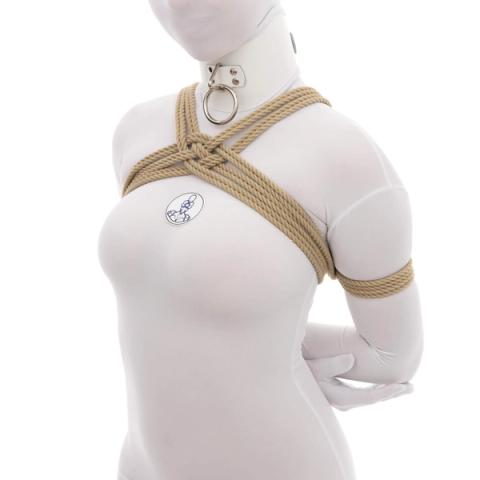
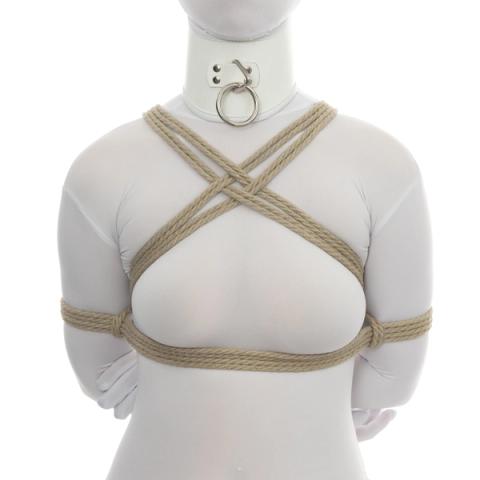
Box Ties are popular with rope enthusiasts. (For examples see: Bolero Box Tie, Box Tie with 101 Techniques, Gote Shibari, Karada Box Tie, Cross-Chest Box Tie.)
However, there are important things to understand about this position. It is not something everyone can just do, so it is important to test that this position can be safely maintained by your partner before tying them into it!
This position by itself, even with no rope involved, may pose a risk of nerve compression on some people or if tied too tightly. Nerve compression is a dangerous situation that can result in long-term or permanent injury if not managed carefully.
- Educate yourself on the nerves of the arm and hands.
- Test that your partner can safely assume this position before tying them into it.
- Make sure your partner knows how to do motor and sensory tests.
- Order them to inform you immediately if they detect an issue.
See the links above and in the tutorial below for more details on how to manage this risk.
If testing does show that you/your partner may experience nerve compression, and you want to be able to do so, there are things you can do to work toward it!
A combination of yoga for the shoulders and arms (see Stretching for Box Ties) and a practice of “nerve gliding” can help build toward the ability to do this. For nerve gliding, look for videos from a licensed physical therapist, like these on radial, median and ulnar nerve gliding.
Risk Management and Safety
This position by itself, even with no rope involved, may pose a risk of nerve compression on some people or if tied too tightly. Nerve compression is a dangerous situation that can result in long-term or permanent injury if not managed carefully.
- Educate yourself on the nerves of the arm and hands.
- Test that your partner can safely assume this position before tying them into it.
- Make sure your partner knows how to do motor and sensory tests.
- Order them to inform you immediately if they detect an issue.
See the links above and in the tutorial below for more details on how to manage this risk.
If testing does show that you/your partner may experience nerve compression, and you want to be able to do so, there are things you can do to work toward it!
Video
Pictures & Text
As with all ties, it is good practice to test that your bottom can be in your planned position comfortably without rope before tying in that position for any length of time. So, have your partner assume a good box tie position:
Shoulder Position & Nerves
When doing Box Ties, it is important to ensure your partner is using good body mechanics. If a person has never been shown how to position themselves, they may actually have more range of motion than they believe.
One example of this is when a person believes they cannot put their arms behind their back. It may be true … or it may actually be that they have not been shown how important shoulder position is in order to do so.
If the shoulders are forward — as is common, especially for people with office or desk jobs — it is much more difficult to get their arms behind the back.
When you shift your shoulders back, it naturally moves your arms further back…
…and they have a shorter distance to go to get fully behind the back.
Rotation is also important. In order to get your wrist behind your back…
…your shoulders need to rotate forward.
The *combination* of shifting your shoulders backward and rotating them inward…
… is what allows you to assume a box tie position.
Now the wrists are much further back and there is some overlap between them. This helps make a box tie more comfortable and sustainable.
Important Risk Management Note: For some people, doing nothing more than putting their shoulders back can lead to nerve compression.
The Brachial Plexus is a network of nerves that runs from the cervical vertebra at the back of your neck, across the front of the shoulders…
…and then form the three major nerves that provide motor function and sensory information for the arm.
An important test when working with a new bottom and planning a BTB (behind the back) tie, is to make sure they are comfortable having their arms behind their back with no rope before doing this in a scene.
Start by helping them shift their shoulders backward.
Then have them assume one of the recommended wrist positions below; one they feel comfortable maintaining for awhile. Their arms should be at 90 degrees or as close to that as they can get.
If they are unable to assume this position, they *can* still be tied! See the Adapting Ties tutorial, Section 5 - Options for Handling Limited Limb Mobility, for tips.
Make sure they know how to do sensory and motor tests (link in description above).
If your partner experiences any strange sensations when in this position (without rope) and you both want them to be able to do so in the future, this is something they can work toward. A combination of yoga for the shoulders and arms (see Stretching for Box Ties) and a practice of “nerve gliding” can help build toward the ability to do this. For nerve gliding, look for videos from a licensed physical therapist, like these on radial, median and ulnar nerve gliding.
Wrist Position:
The classic position is to have the wrists rotated so that they are both facing rearward.
When the rope is applied, the majority of the pressure will be to the back of the wrist, not the sensitive areas on the inside of the wrists.
Depending on your partner’s flexibility, their wrist can even be lifted a little further up the back…
…or perhaps more than a little.
Another option is to rotate the lower arm so that the wrists are directly facing each other.
In this version, the pressure from the rope is entirely to the back of the wrist, not the sensitive areas on the inside of the wrists.
This position does require additional rotation of the arms. It may be difficult for some.
Another angle of the ‘Inverted Lower Wrist’ version of the position.
WARNING – Putting the lower wrist facing downward will put all the pressure directly on a high-risk area. This is not something you want to do in most circumstances.


Comments
Loading comments...
Sign in to leave a comment.