
Aufwickeln und Lagern von Seilen
By Lazarus Redmayne
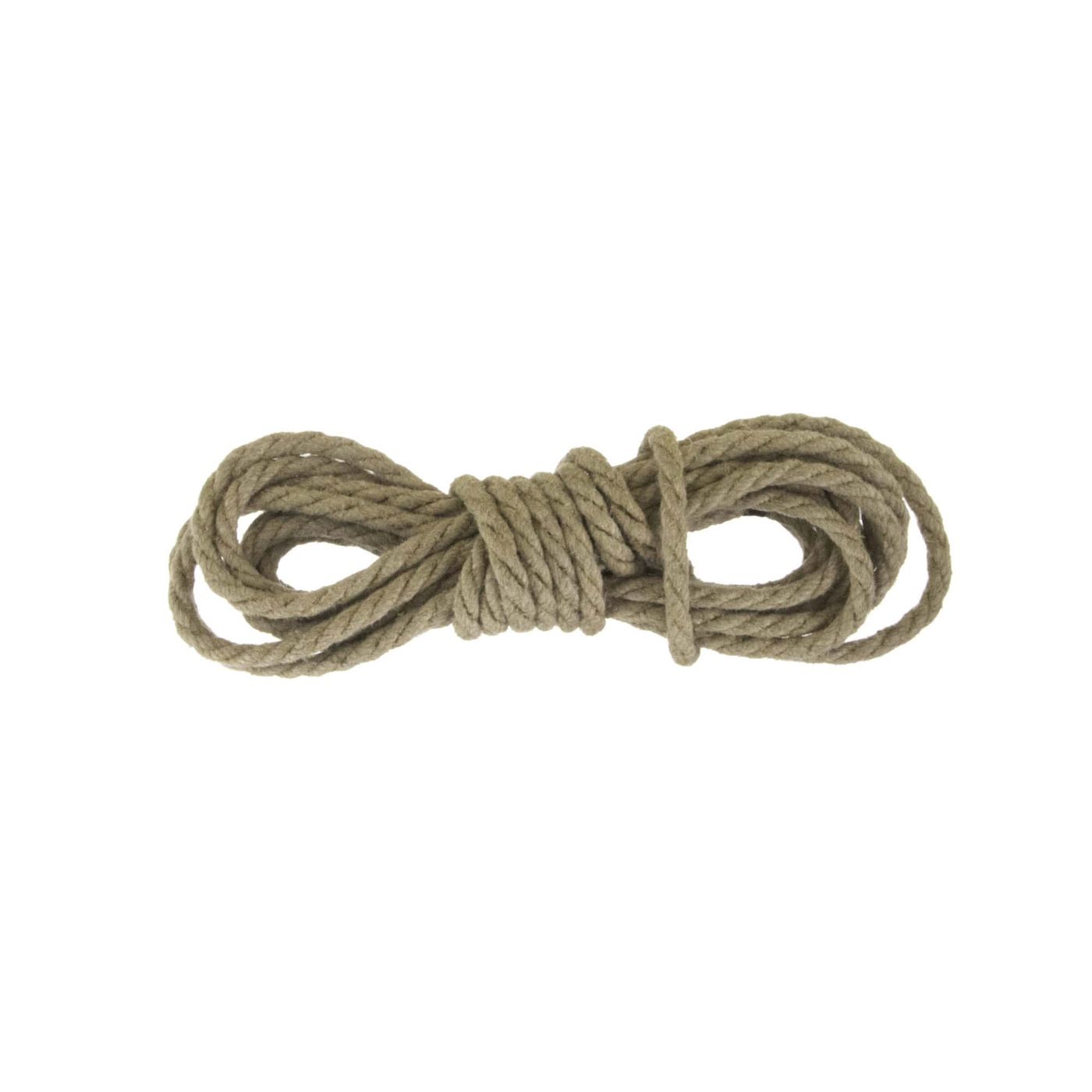
Here are a few ways to coil and/or store your ropes.
This is by no means an exhaustive list; there are *many* others... :)
See the Picture & Text sections below for some pros and cons of the various options.
If you have the space and privacy, consider just hanging your rope over a dowel rod.
You will only want to do this if you have a rod that is a little wider so that you don’t kink your rope too sharply.
For the ropes I use every day, I hang them in my closet just like this!
If you don't want to hang your rope, it is useful to keep it in convenient bundles, called “hanks”.
One of the more useful ways to do this is in a Figure-8 pattern. By doing this, the hank will be less likely to become tangled.
This technique is good for coiling rope for short/mid-term storage or for travel.
For longer-term storage
If you will be storing your rope for more than a week or two, do one more thing… This helps protect the bight and is better if you are going to store your ropes for a longer time.
When you are ready to use your rope…
This approach is very stable; however, I personally don’t often use it. If you leave your rope stored in this way for a while, it tends to be a bit kinky when undone. ::Pauses for the obvious joke:: I prefer my ropes to be straight, so I don’t use this for long-term storage.
That said, this can be a good choice when you need to wash your ropes. Put it into a loose chain stitch and throw it into a laundry bag. This will allow the water and soap better access than the above options would.
Uncoiling & Use
Video
Pictures & Text - Hanging your rope
If you have the space and privacy, consider just hanging your rope over a dowel rod.
You will only want to do this if you have a rod that is a little wider so that you don’t kink your rope too sharply.
For the ropes I use every day, I hang them in my closet just like this!
Pictures & Text - Wrapping rope into a hank (figure-8 style)
If you don't want to hang your rope, it is useful to keep it in convenient bundles, called “hanks”.
One of the more useful ways to do this is in a Figure-8 pattern. By doing this, the hank will be less likely to become tangled.
This technique is good for coiling rope for short/mid-term storage or for travel.
Find both ends of your rope.
Put the ends in your left hand and place your right hand on the rope 8-10" away. Both hands should be palm down.
Put your left thumb on top of the rope and your right thumb under.
Then reach down with your left thumb and hook the rope.
Then do the same with your right.
Keep alternating thumbs…
… back and forth …
Until you are near the end.
You should have a nicely organized figure-8 pattern like this…
…with the end neatly in the pattern.
Shift your grip.
Begin wrapping the remaining tail around the hank.
Make your second wrap over top of the first wrap.
Like this.
Continue wrapping until you have 4” or so remaining.
Now find the first wrap…
…and pull it out just a little.
Run the bight under that first wrap.
Now find the other side of that first wrap.
Pull it and the bight in opposite directions to tighten.
Done! This is the bight ready to go!
For longer-term storage
If you will be storing your rope for more than a week or two, do one more thing… This helps protect the bight and is better if you are going to store your ropes for a longer time.
Continue from Ending 1 above.
Run the bight through the coils of the rope.
Like this.
On the other side of the coil, grab the bight, open it into a loop, then…
…flip it up and over the end of the coil of rope.
Like this.
The bight is barely bent at all. This is better for rope longevity.
This is what the completed hank looks like from the other side.
Here is your completed hank, ready to be stored or put in your toy bag.
When you are ready to use your rope…
If your bight is through the hank…
…free it first.
Once it is on the first side…
…free it from the wrap.
Keep ahold of the bight…
Now you can drop the rest of the hank on the floor, it will uncoil without tangling and you are read to tie!
Pictures & Text – Chain stitch. Great for washing rope!
This approach is very stable; however, I personally don’t often use it. If you leave your rope stored in this way for a while, it tends to be a bit kinky when undone. ::Pauses for the obvious joke:: I prefer my ropes to be straight, so I don’t use this for long-term storage.
That said, this can be a good choice when you need to wash your ropes. Put it into a loose chain stitch and throw it into a laundry bag. This will allow the water and soap better access than the above options would.
Begin with your rope folded in half
If your rope is long like this one is, perhaps fold it in half again
Hold the bight and…
…make a small loop over your fingers with the tail
Reach through that loop and grab the tail
Pull a small loop through
Like this. Don’t make the loop too big
Reach through that new small loop and grab the tail
Pull yet another small loop through
Repeat until your run out of rope.
When you reach the end…
…and you only have a little tail left…
…pull the last little bit of the tail all the way though
Like this. This locks it off
Done!
Uncoiling & Use
When you are ready to use the rope…
…grab the bight…
Then remove the tail from the last loop.
Then pull the tail.
The whole chain will come undone
…
…
Grab the bight and you are ready to go!
Comments
Loading comments...
Sign in to leave a comment.