
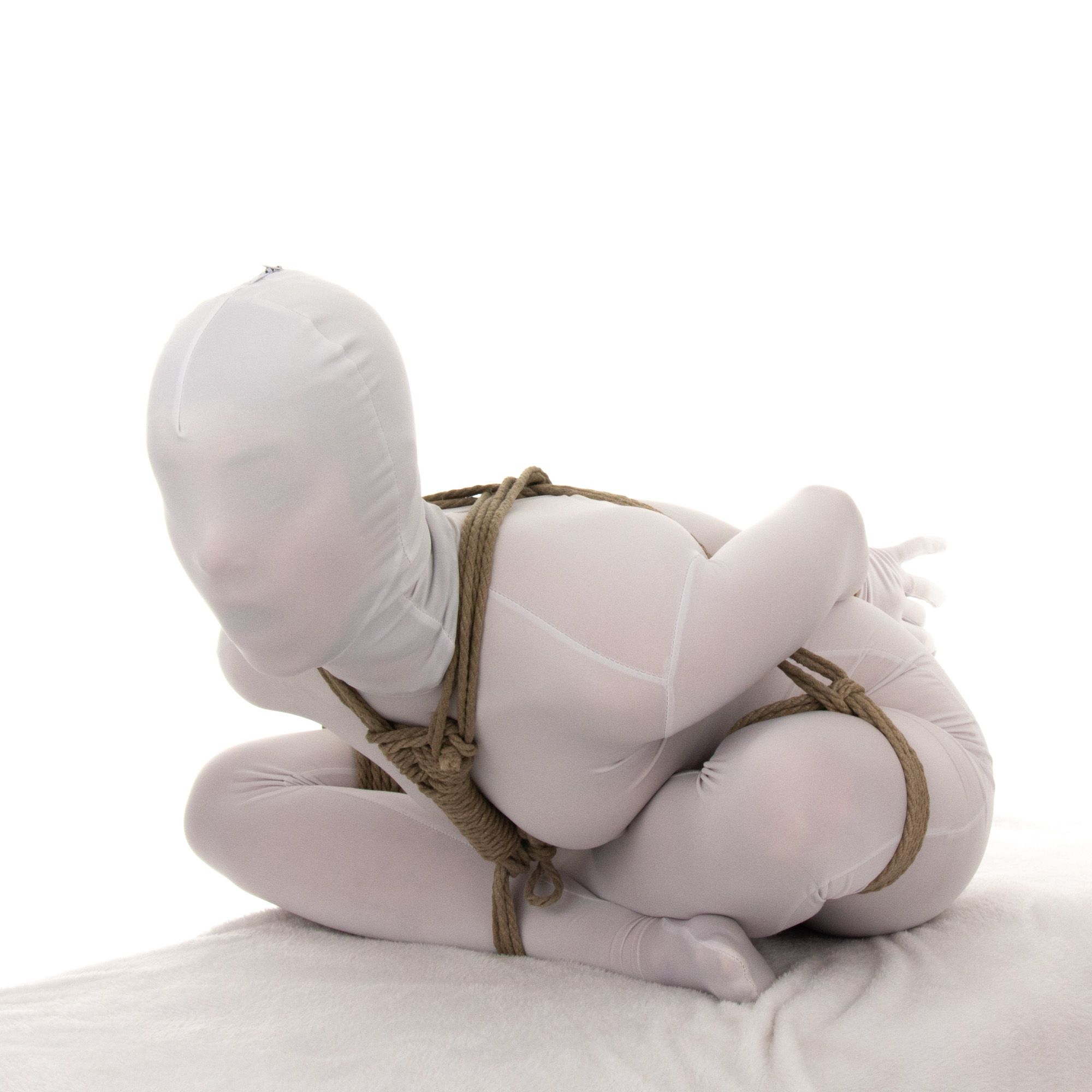
Ball Ties - Examples 2-7
Here are a few examples of tying your partner into a ball. Do the 'Ball Ties' tutorial first!
BDSM Ball Ties
This post shows examples of Ball Ties. If you have not already been through the Ball Tie tutorial, go do that first, then come back here for the examples!
Safety Concerns for BDSM Ball Ties
- Risk of Positional Asphyxiation
- - Ball ties can be very restrictive. If you make them too tight they can impact your partner’s ability to breathe. This is a bad There are two factors here that need to be managed. (1) The tightness of any strap around the chest. This can restrict chest movement and impact breathing. (2) The curled-up position of the body, a position that restricts the movement of the abdominal muscles. If both of these factors are too strict (tight), it can make breathing difficult or even impossible. Start easy. Don’t make either strap of the chest harness too tight (it should be a gentle hug) and make the ball you tie your partner into loose when you first try this. Test what your partner can safely handle and build intensity over time. Be sure to keep clear communication and, if they report any trouble breathing, immediately release the strap that cinches them into a ball, the one that keep the knees tight to the chest.
- Risk of Injury (Arms)
- – This tie can be incredibly restrictive. So much so that the subject can be made almost entirely unable to move themselves. This means that, if their arms are tied around their legs and they are then tipped on their side, they will be laying on that arm and be helpless to move themselves off it, unable to relieve the pressure of their body weight on that arm. This can lead to unwanted pain or injury if left too long. If you find your scene has gone in this direction, move your partner into different positions periodically to manage this impact.
- Risk of Injury (Back)
- – This position can put stress on the back. If left in this position too long, your partner may experience strain or stress to the muscles or other soft tissue in their back. Have them stretch first. Limit the amount of time your partner is in this position until you understand their tolerances. Keep clear communication. Don’t push too far, too fast.
- Risk of Injury (Neck)
- – This risk applies more to a variant that you may have seen pictures of online. In variants that run a rope around the back of the neck instead of over the shoulders or back to hold them in a ball. In this position, the rope across the back of the neck may be pulled too tightly and/or remain tight for too long. This runs the risk of moving the cervical vertebrae in a way that can cause pain or injury. We do not recommend this variation as we consider it to be too risky for our taste. That is why we don’t include that option in this tutorial.
For this tutorial, I used various 30' (~9m) and 15' (~5m) pieces Natural 1/4" (6mm) hempI use an amazing Natural hemp rope provided by my affiliate Twisted Monk. Check them out!
Examples - Various paths choosing different options from each layer of the Ball Tie tutorial.
Examples 2-5 all start the same way, but all have different endings. We don't show every step here, but just enough to show the main layers.This example is shown in step-by-step detail its own tutorial: Ball Tie - Example 1
Artists Corner
Artists Corner
Having a strap around the whole ball as is shown in the last few steps will make things feel much more restrictive. But if your partner is an eel or is given the ability to work at it, they will be able to work that strap loose. To prevent this, add one more step (not shown) of running additional lines to that strap to add cinches or otherwise hold it in place so it cannot be worked up or down and thus loosened.