
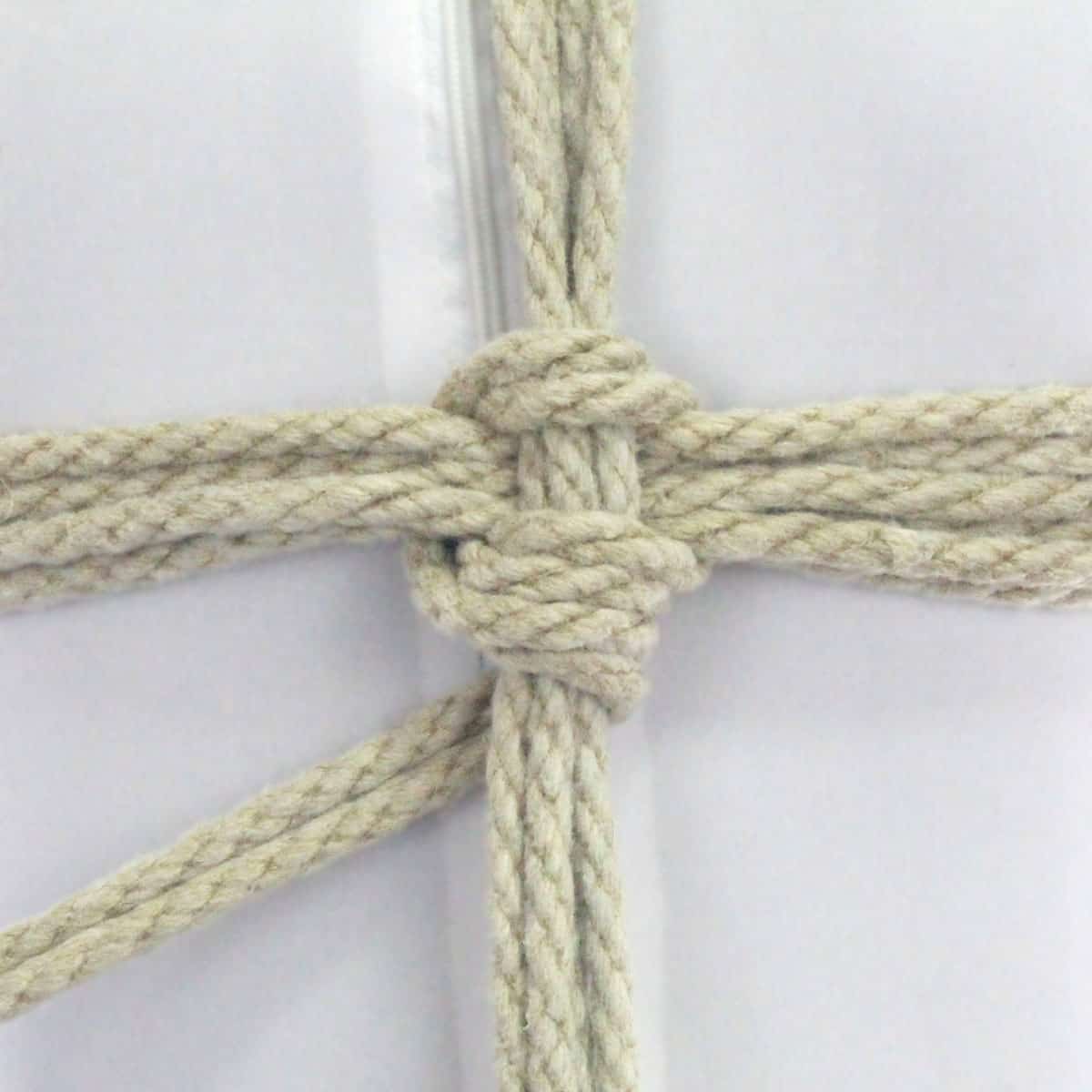
Frictions
Frictions are used to connect two bands of rope together tightly so that they support each other and don't slip out of position
Frictions are used to connect two bands of rope together tightly so that they support each other and don't slip out of position. This tutorial covers the: • X Friction • Square Friction (aka Half-moon Friction) • L FrictionNotes - Frictions should always be very hard when you are finished tying them. Tug each part tight as you are tying it so there is no slack inside the knot.For this tie, I used Natural 6mm (1/4") hemp provided by my affiliate Twisted Monk. Check them out for some amazing hemp rope!
The X Friction
This friction is very fast and locks two lines together quite strongly. It is often a good choice where there are two lines crossing each other as a 'T' or at right angles, '+' (The same application method below works for both.)
The Square Friction -- aka Square Lashing, aka Half-moon Friction
While this friction is often referred to by the short-hand name "half-moon friction", it is technically two half-moon frictions back-to-back. But whatever name you choose, this technique locks two crossing lines together very strongly. It is most commonly used where there are two lines crossing each other at right angles, thus: '+' It is a little more bulky than the X Friction , but the lines lay a little differently which may make it a better choice based on how you want the lines to run, where you can most easily get access when tying it, or for the aesthetic.
Same thing, but put on the other way around, just so you have seen it...
The L Friction
This friction reaches slightly sideways to anchor one line to another. It is useful where the line being anchored would tend to move one direction (say more toward the hands) and you would like to prevent it from doing so AND the line doing the friction is not directly parallel to the line being anchored. (In practice, this is less commonly used.)