
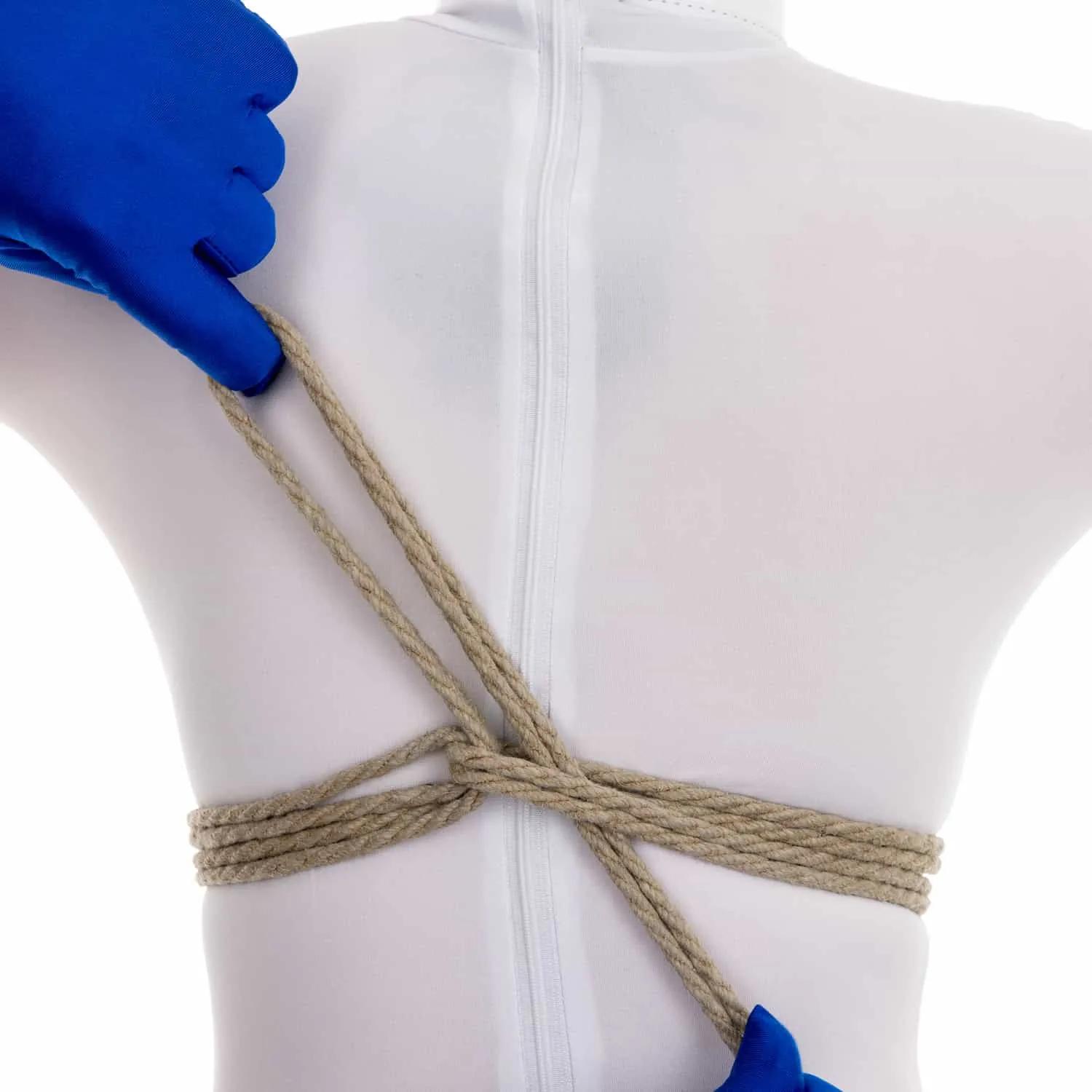
Handling Rope While Tying
Understanding how to move rope efficiently, add more if you need to, use up extra rope at the end and modify a tie for different body types are all important skills.
Rope bondage is an art. This can be true not only of the completed tie, but of the process itself. There are ways to handle rope, to move it and to manage its flow during the tying process, that make your tying itself look and feel like an art form.
These techniques are not difficult. They make the tying easier, reduce the risk of rope burn, and of having rope tails flying around and possibly hitting your partner in unexpected ways and places. They give you options to extend rope in the middle of a tie, if needed. This means you don't need super long ropes to do various harness ... which, in turn, means that you can tie more quickly, because your tail pulls won't take as long. They also give you various techniques for using up extra rope at the end in ways that are attractive and give your tie a completed, professional look.
Don’t try to tie any of these techniques quickly at first. Focus on learning to do it correctly. Work on the technique. Speed will come with practice. The only way to get good at rope is to practice and drill. Once you know how to do it, do it over and over again, build muscle memory. While watching TV or whatever, keep doing drills, tie it on your ankle or whatever over and over. Repetition is how you improve. But it is important to be practicing the correct thing!
- How to move rope efficiently and smoothly, and in such a way as to reduce the risk of rope burn, all while setting a particular Style and Mood!
- How to connect two ropes when they cross each other (various kinds of junctions).
- How to extend rope -- add a new rope when you need more so you can keep tying.
- How to use up or "burn" rope when you have more than you need.
- How to "lock off" your tie.
- How to modify a tie for various body types.